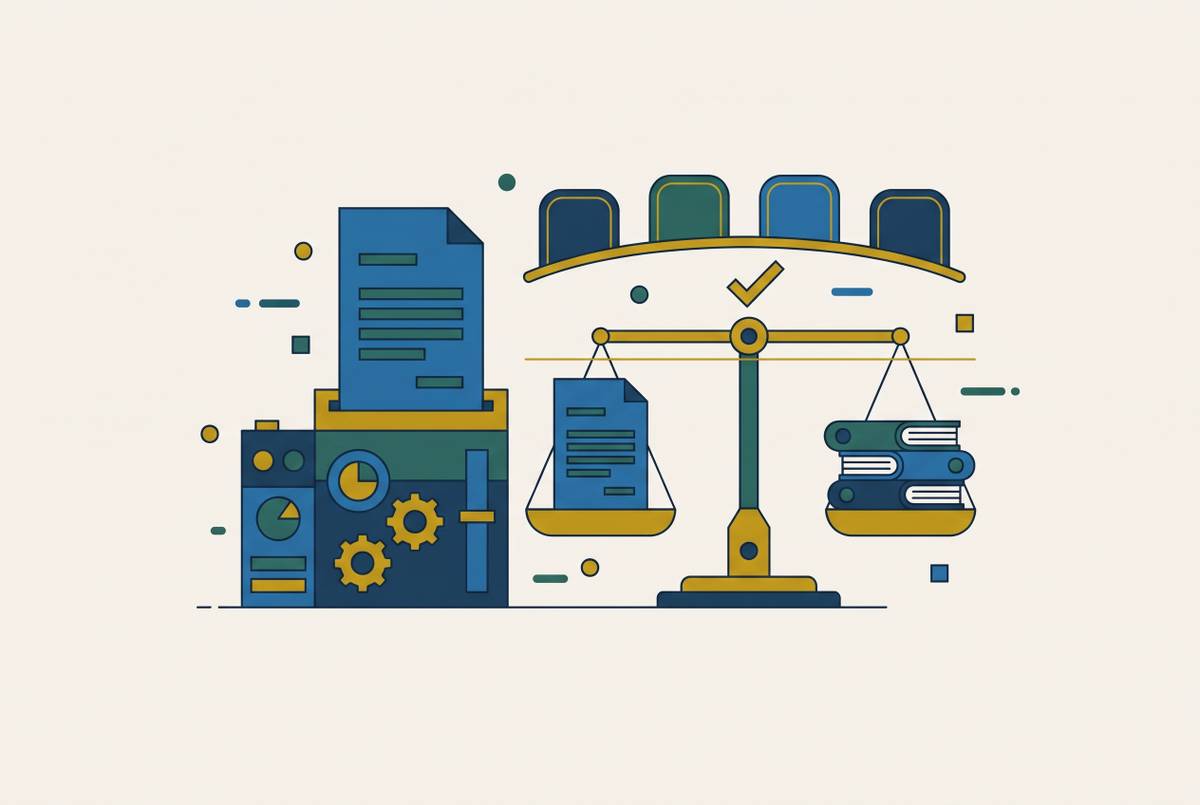
Single-Input Deal Packaging How One Property Dataset Should Feed Both the OM and the Loan Memo
Unified deal data cuts rework and version drift between offering memorandums and loan memos.

Automated CRE offering memorandum and loan memo generation should start with one shared property dataset. A purpose-built CRE platform can extract the rent roll, T-12, leases, and property facts once, then populate both documents from the same source-cited inputs. The architectural gain is consistent documentation that frees analysts and brokers to review the deal.
Why the OM and loan memo are built from the same raw material but assembled twice
The same rent roll PDF lands in two inboxes. On the broker’s desk, an analyst reads it to assemble the offering memorandum. On the lending side, another analyst reads it again to populate the credit memo. Both need occupancy, tenant information, and lease expirations, yet each turns the same source into a separate working dataset.
The T-12 follows the same path. Its income and expense categories go into the financial summaries in both documents, while leases, property descriptions, and market comps add the detail behind them. An existing OM, the rent roll, and the T-12 form the familiar core of the deal folder. The OM is therefore both a downstream presentation and, when a package moves between teams, an upstream reference for the next document.
Each team assembles the inputs independently, often in sequence, because the underlying data has no shared home. Each document holds its own copy of the facts, and each handoff means copying them again.
What breaks when duplicate assembly is the default
Version drift makes that architecture visible to the lender. An OM and a loan memo built days apart by different people can show different NOI figures for the same property. The discrepancy then becomes a review problem. Before looking at the economics, the credit team must find which number matches the source and whether an error or an underwriting adjustment caused the figures to diverge.
Transcription adds another route to the same loss of trust. A small error can propagate into the model, while reviewers extend their checks because the assembled figures cannot be accepted without returning to the documents. Aidium’s 2025 survey identifies disconnected tools as a major contributor to production inefficiency among lenders, with redundant processes and rework as the cost.
Talent misallocation is the less visible consequence. Skilled underwriters who spend most of their day extracting line items and copying figures into memo templates are not testing assumptions or assessing credit. Data entry produces no analytical value of its own. When separate teams repeat it, the deal consumes additional expert attention and review capacity reconstructing evidence at the expense of interpretation and expert judgment.
What a single-input architecture actually means in practice
A single-input architecture changes where the data lives. Instead of treating each document as a separate store of property facts, it gives both documents a structured dataset to read. The distinction resembles two reports querying a database rather than two analysts copying from the same spreadsheet. A better template changes where people enter data by hand, while a shared data layer means they only have to enter it once.
In practice, a platform ingests the OM, rent roll, T-12, and lease agreements, then uses NLP and computer vision to extract and normalize their contents. It maps the results into fields that downstream documents can use. Teams share one version of the extracted data, deal status, and underwriting assumptions. Changes propagate through the shared layer automatically.
Both outputs must read from the same snapshot. With both using that snapshot, shared financial fields stay in agreement because no one has copied an older value into one document. This preserves documentation integrity. A common dataset can still contain an extraction error or an assumption that needs challenge.
Source lineage makes that distinction manageable in review. Purpose-built platforms cite extracted numbers back to the original source page, allowing a reviewer to inspect the evidence behind a field. Auditability therefore belongs in the data architecture. It supports internal compliance and lender review while preserving the analyst’s responsibility to validate the inputs.
How do you create a lender-ready loan memo without starting from scratch?
The shared dataset has the financial inputs ready before credit analysis starts. The rent roll has occupancy, tenant information, and lease expirations, and the lease stack lets the analyst check the terms behind them. The T-12 has the operating income and expense categories used to assess NOI. AI maps these fields into a structured underwriting model rather than leaving the analyst to transcribe them into a fresh template.
The model then applies the lender’s credit policy. Using the extracted dataset and underwriting assumptions, the platform runs DSCR, LTV, debt yield, and break-even occupancy calculations. These model outputs still require source validation. The workflow also flags anomalies such as concession-inflated gross rents, below-market management fees, and unusual expense ratios, directing attention toward inputs that may distort the credit picture.
At that handoff, the analyst validates the source data, owns the model, tests assumptions, and makes the credit judgment. The loan memo can then be generated with source citations supporting its figures. Extracted inputs link back to the rent roll page or T-12 line they came from, while the calculated results stay in the model the analyst must defend.
The lender’s credit team receives evidence it can check against the source, saving it the work of rebuilding the financial inputs before beginning its review. That supports faster approval review without removing the credit decision. The borrower benefits from the same reduction in avoidable work on the lender’s side.
How the same dataset populates the OM side
The OM uses the dataset already assembled for the deal. NOI, occupancy, lease expirations, expense categories, and tenant information populate its financial summaries without another pass through the source files. The audience changes, but the property facts do not. Where the loan memo organizes those facts around credit analysis, the OM organizes them into the broker’s presentation of the property.
The narrative layer draws on those facts and market comps. AI drafts property descriptions, market write-ups, and executive summaries, moving the broker’s work from blank-page composition to editing. Charts and summary tables also populate from the structured data. This removes the separate spreadsheet assembly that would otherwise be needed to turn the same inputs into presentation exhibits.
The broker still shapes the investment narrative. Even with the financial summary filled in, the broker must decide which features of the property to stress and whether the draft gives a fair picture of the opportunity. That editorial work is distinct from reconstructing occupancy and expenses. Because the common financial fields come from the same snapshot as the loan memo, their agreement does not depend on a final manual reconciliation.
Borrowers who send AI-structured packages, with data from financial documents already extracted into the format the lender expects, give the lender cleaner inputs for its own extraction layer. This helps the lender review the deal faster as well as speeding up the work of marketing it. The OM becomes a presentation of reusable deal data.
Where human judgment must remain in the loop
The checkpoint belongs where extracted facts become underwriting assumptions and a decision. Centralization does not remove that boundary, and automated document generation should not obscure it. AI can read the files, extract structured inputs, flag inconsistencies, and draft a first-pass analysis. The analyst must validate those inputs and decide what the evidence supports.
General LLMs are useful for drafting LP communications, structuring IC memos, and summarizing long documents. They are less reliable for structured numerical extraction without purpose-built validation layers. A fluent narrative is not evidence that a rent roll or operating statement has been read correctly, especially where numerical hallucination can enter the analysis.
Purpose-built validation helps people focus their review, which they still have to do. Source citations let the analyst check a field against the document it came from, while anomaly flags show where to take a closer look. The analyst still owns the model and tests its assumptions. The workflow must therefore spell out what to check before a draft becomes a package for the lender, instead of just telling people to review the AI’s work.
That checkpoint is usable only if the outputs are auditable. A financial figure that cannot be traced to the rent roll, T-12, or lease creates a re-verification task for the analyst. A cited output is a reviewable output.
What agentic AI adds to the single-input workflow
Agentic AI coordinates tasks that extraction alone leaves disconnected. Instead of handling only a rent roll, an agentic framework can coordinate a sequence that pulls market data, runs comps, builds the pro forma, and stress-tests the model. It can then flag risks, draft the investment committee memo, and route exceptions to the appropriate human reviewer.
That coordination depends on a shared source of truth. Without it, each agent would need to extract or reconcile the inputs again, reproducing the original fragmentation with more automation. The single-input dataset gives the sequence a common factual base. Human handoffs can then focus on exceptions and judgment rather than transferring numbers between disconnected tasks.
CRE packaging has a well-defined structure for this approach. Its recurring inputs include the OM, rent roll, and T-12, while its outputs include the OM, loan memo, and IC memo. The handoff points between those tasks are also well-defined. These characteristics make the workflow suitable for coordination without implying that every investment or credit decision can be delegated.
CrewAI’s 2026 State of Agentic AI Survey found that every enterprise surveyed plans to expand agentic AI deployment. The same survey found that organizations had already automated a substantial share of workflows and expected an additional 33% expansion in 2026. Those findings describe adoption across enterprises. For deal teams, the architectural requirement remains the same regardless of adoption pace, because coordinated tasks need consistent inputs.
How to move from a fragmented stack to a single-input workflow
The first action is to inventory the overlapping source files. A team moving to single-input packaging should identify which rent roll, T-12, and property description currently feed both documents, then confirm that they sit in one version-controlled location before introducing AI. This establishes where the shared dataset should live. The transition does not require replacing every existing tool at once.
The next decision is the extraction and document-generation layer. A purpose-built CRE platform should ingest the source files, normalize the data, and cite its outputs back to the original documents. Auditability comes first, speed second. The useful comparison is whether a system can support reviewable inputs for both outputs.
The human checkpoint should then be written explicitly. It should identify which fields analysts spot-check and which lease clauses always require manual review, including rent escalations, CAM, co-tenancy, assignment, and renewal options. It should also define which outputs proceed to the lender without further re-entry. A written SOP gives that division of work a repeatable form before the team expands automation.
The first implementation should target the workflow used most frequently. Its results should be measured by time from intake to partner-ready package and the number of reconciliation rounds between OM and loan memo figures. Once the time savings are demonstrated, the team can expand into agentic coordination across the deal lifecycle. A small team needs a workflow that returns hours and a written process before it needs broader orchestration.
Sponsors and brokers who submit pre-extracted, source-cited financials move through review faster, while raw-PDF submissions leave the rework on the lender’s timeline. The immediate decision is therefore concrete. Establish one version-controlled home for the shared source files, then build the first document workflow from that foundation.