Ending the Spreading Bottleneck That Slows Institutional CRE Deal Timelines
Faster extraction won't clear the queue unless data flows onward.

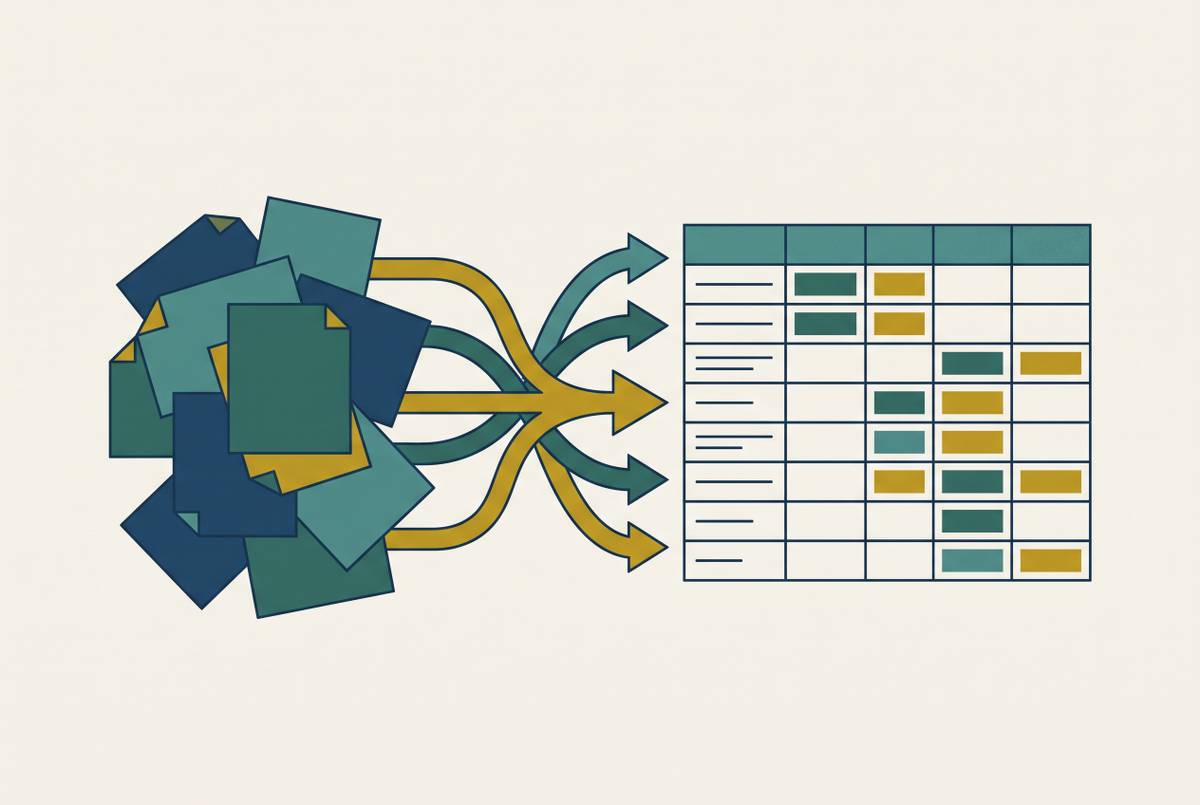
AI financial spreading automation for CRE underwriting teams converts borrower documents into structured model inputs, replacing manual re-entry with reviewable extraction. Ending the spreading bottleneck requires those inputs to flow directly into underwriting, credit memos, and the wider deal workflow. The constraint is throughput, and the queue persists despite faster extraction if analysts must rebuild the data at every handoff.
Why 2026 is a throughput crisis, not a capital shortage
Loans pushed out from 2024 and 2025 are coming due in 2026, adding refinancing work to an already constrained underwriting process. CR Equity AI’s maturity wall report identifies the binding constraint as the number of files a human underwriter can price before the clock runs out. The distinction changes the operational diagnosis from solvency to queue capacity.
The same report places the heaviest maturity concentration with depositories and CMBS/structured product holders. Depositories had previously signaled plans to shrink their CRE books, although many have since signaled a return to CRE lending growth. That shift does not itself expand underwriting capacity. Each refinancing still brings documents that must be interpreted, financials that must be modeled, and a credit decision that must be supported. Manual workflows cannot absorb that demand simply by adding headcount, because underwriters are not available to hire at the pace the market requires.
What the spreading step actually is and where it sits in the deal sequence
Spreading converts raw borrower documents into structured financial data that an underwriting model can use. An analyst takes information from a PDF rent roll or scanned trailing 12-month income statement and places it into the relevant model fields. The task requires interpretation because sponsors and brokers organize the same underlying information differently.
The incoming file may include offering memorandums, rent rolls, operating statements, appraisals, and borrower financials. In a manual process, an analyst reads those documents, identifies the relevant figures, and re-enters them into a model. This is the first gate in the sequence from document intake through underwriting, credit memo, credit committee, and term sheet. A delay here propagates through the review chain. Static spreadsheets add data latency, separate copies lead to version conflicts, and third-party reports kept outside core systems make appraisals harder to manage. Those problems affect more than how fast someone types, because they change which information each reviewer has.
Why spreading is slow: the structural reasons, not the surface ones
Document heterogeneity makes spreading difficult to standardize through staffing alone. No two sponsors necessarily use the same column labels, line-item groupings, or date conventions in a rent roll or T-12. Interpretation precedes entry on every unfamiliar file. An operating statement can run to dozens of pages, with figures scattered across exhibits. Manual re-entry then introduces differences between analysts and errors that can propagate into LTV and DSCR calculations.
The organization of the work compounds the problem. When reviews happen in sequence, each person must learn about the deal before passing it on. Adding analysts means more people can work on files, but the documents still vary, people still have to interpret them again, and context still gets lost between reviewers. More people remain dependent on the same slow process. The structural rate of work remains constrained by how information enters the model and moves to the next person.
Under queue pressure, that constraint starts shaping origination choices. Manual shops raise the minimum deal size, turn down complicated files rather than structure them, and take their time with the work that is left. This is more than a service delay. A process intended to support credit decisions becomes a filter that favors files the team can process readily, rather than allowing the team to evaluate opportunities on their merits.
How AI can automate rent roll and operating statement spreading
Automated document extraction changes what the underwriter receives at the start of the analysis. AI-powered platforms can parse offering memorandums, rent rolls, T-12s, appraisals, and leases, extract relevant fields, and map them to standardized model inputs without manual re-entry. Instead of assembling inputs from scans, attachments, and competing versions, the analyst can examine the extracted information and resolve exceptions.
The underwriter still reviews flagged assumptions, evaluates rent growth and exit cap scenarios, and assesses questions the model cannot settle. Automation removes the need to act as a data translator before doing that work.
Extraction errors remain a legitimate concern, however. Structured output with flagged confidence scores gives the analyst a basis for review and correction, whereas manual re-entry errors can pass silently into a model. That advantage depends on making uncertainty visible. Clean-looking numbers without review signals would leave the team with a new source of errors that are just as hard to spot.
Where the bottleneck migrates once extraction is solved
If extraction produces structured data that an analyst must still map by hand into underwriting, the queue stays in place at the next step. The document has been processed, but the model still waits for human translation. The same failure can recur after closing when servicing teams rebuild loan structures from PDF credit memos because the closing data does not flow forward.
A throughput solution therefore requires structured information to move continuously beyond an export or a completed spread into the next stage. Otherwise, faster intake just gets work to the next queue sooner. The process remains sequential even though its first step has improved.
Direct data flow also allows parts of the work to proceed in parallel. When extraction feeds a live underwriting model, market comp pulls, the property overview, and the tenant summary can develop concurrently with the financial analysis. The credit analyst need not wait for every part of underwriting to finish before beginning those tasks. This preserves the review chain and its judgments while removing avoidable waiting between activities that can use the same structured deal information.
What a spreading workflow built for throughput actually looks like operationally
A workflow built for throughput uses one deal record from intake through the credit memo. Structured information lives in that record rather than being divided among an analyst’s local Excel, a shared drive, and a separate CRM. Underwriting, credit memo preparation, lender matching, and the deal room all use data from that record. The record anchors the work across stages. It also provides the foundation for extraction output to populate live underwriting inputs without a separate translation task.
Review remains part of that connected workflow. Assumptions have confidence levels, rent roll anomalies are surfaced for analyst review, and IC memo drafts draw from structured data. Analysts review and adjust the output. The wider system links automated rent roll ingestion to dynamic loan sizing based on real-time cap rate adjustments and to integrated collateral management. Those tools belong in the same process because a calculation or report kept apart from the rest can bring back the manual handoff that spreading automation was meant to remove.
There is nevertheless a limit to what software can accelerate. Borrower-provided rent rolls, operating statements, leases, and entity papers can be processed as they arrive. Appraisal, environmental, title, and survey reports run on vendor calendars. Software compresses the first group and sequences the second. Treating both as equally automatable overstates the potential reduction in diligence time and obscures where the remaining wait actually sits.
Why CRE-native, source-backed AI matters more than generic extraction tools
A rent roll’s “base rent” column may move between documents, use different labels, or represent net or gross rent depending on lease type. Extracting the text does not resolve that distinction. CRE-native training provides the domain context needed to identify relevant fields and flag ambiguities that affect underwriting. A general-purpose model parsing a rent roll is therefore not, by itself, a throughput solution.
When people work from different versions of deal structures, errors can get into LTV or DSCR calculations even if each extraction looks right on its own. A clear audit trail gives reviewers a basis for relating outputs to their sources. Confidence flags and source references serve different purposes. The former direct attention to uncertain extraction, while the latter support examination of the underlying information.
Extraction AI must respect the deal room’s permissions so that an analyst’s model pull does not expose a lender’s proprietary comp data. SOC 2 Type II security and permission-aware data access belong among the operating requirements. Legacy-system compatibility is equally consequential. A tool that requires a rip-and-replace migration before its output can reach the underwriting model does not deliver an immediate solution to the processing queue.
The relationship and lender data problem that spreading automation surfaces
Property type, size, geography, leverage, and timing can support automated matching against lender appetite rather than requiring a broker to recall comparable transactions from memory or a contact list. Instead of preparing information only to assess a loan, the workflow also prepares it to identify where that loan may fit.
Deal activity can become relationship intelligence in the same way. When a broker submits several opportunities but only a few reach underwriting, that pattern helps distinguish volume from strategic fit. Across files, structured activity can show which brokers consistently produce suitable deals, which sponsors return as borrowers, and where exposure is concentrating. Manual processing leaves much of that intelligence dispersed. A completed spread may support its immediate transaction without contributing readily to the next one.
For lenders, the sponsor is a relationship across multiple loans. Treating each sponsor as a distinct entity allows associated loans to be viewed across the pipeline, active book, and historical originations. That view supports repeat-borrower opportunities and earlier recognition of concentration. The return from structured data therefore compounds. It can inform which lender to call first, which sponsor to follow up with, and which deal deserves priority in the queue.
What process readiness for the current volume environment actually requires
Readiness depends on the full path from document intake to closed deal. Does extracted data go straight into the underwriting model, or does an analyst still have to map it by hand? Does the credit memo draw from the same structured record, or require a separate research and drafting phase after underwriting? These questions locate the remaining manual handoffs. They distinguish an extraction improvement from a workflow that can process more files without rebuilding information.
Is the deal record in one place from sourcing to close, or fragmented across local Excel, a shared drive, a CRM, and an email thread? Does AI output have source citations and confidence flags, or does it show polished numbers without an audit trail? A file that moves quickly into underwriting but must be reconciled before committee has not escaped the queue.
Over the longer term, connected data must let the system deliver dynamic stress testing, automated covenant monitoring, and concentration management. Risk analysis then becomes a continuous output of the workflow. That is the operational standard behind spreading automation. In a market constrained by throughput rather than capital, teams that connect extraction to the full deal sequence will be positioned to clear the queue while others are still managing it through triage.