Rent Roll Analysis Checklist for Multifamily Loan Packages
Verify occupancy, concessions, and lease terms before submission to survive lender prescreen.

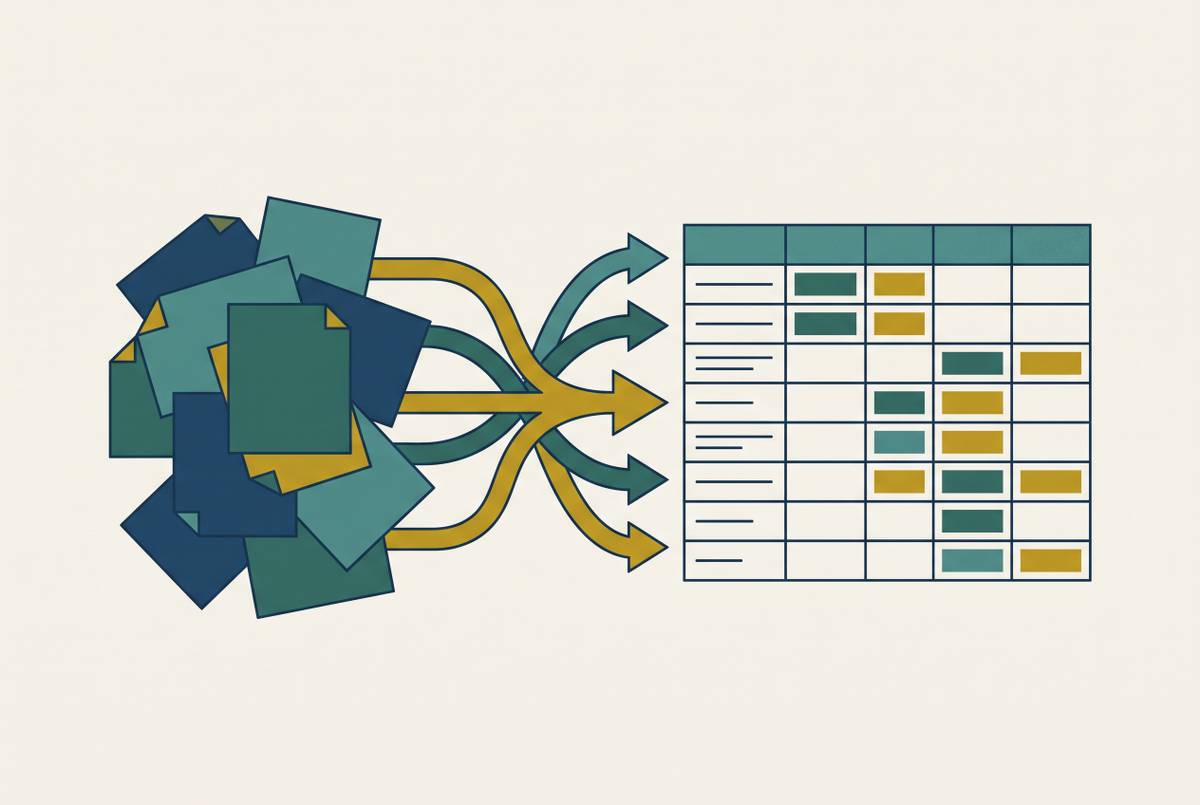
Rent roll integrity is now what gets a multifamily loan approved, not projected rent growth. The checklist that follows walks through the six verification steps, occupancy, lease structure, concessions, delinquency, T12 reconciliation, and renovation segmentation, that turn a raw rent roll into a document a credit committee can actually rely on. Sponsors who run this checklist before submission remove the single most common reason packages stall at prescreen: unexplained gaps between what the rent roll claims and what the property's financials show.
Why rent roll integrity decides multifamily loan approvals now
Lenders are underwriting what a property collects today, not what a sponsor expects it to collect next year. Walker & Dunlop's underwriting trends analysis puts it directly: "Pro forma-driven underwriting has largely been replaced with an emphasis on in-place performance and durability of cash flow. So that shift changes what the rent roll means inside a loan package. It stops serving as background material behind the model and becomes the primary evidence the model is built on.
The timing adds pressure of its own. A large share of multifamily loans originated in 2021 and 2022 are coming due, and the refinancing wave that follows gives lenders no reason to approve a marginal package. Selectivity is rising, and a 2026 underwriting guide lists rent roll quality as one of six factors lenders screen before any deeper analysis starts, alongside NOI and DSCR, LTV, cap rate, vacancy risk, and borrower experience. If a rent roll has unreconciled gaps, undisclosed concessions, or stale data, it can end a deal at that screen, well before a credit team ever opens the financial model.
What a complete rent roll document contains
A rent roll is a unit-level snapshot of a property's rental status as of a specific date. It is not a summary organized by floor plan, and it is not a table a broker assembles for marketing purposes.
Every unit on a complete rent roll carries unit type, square footage, current tenant name, lease start and end dates, current contract rent, market rent, the security deposit on file, any concessions, and any delinquency, as TILT Analytics' step-by-step underwriting guide specifies. The reliable format is a unit-level export pulled directly from the property management system, because a seller-prepared summary can smooth over unit-level anomalies that the raw export would reveal on its own. A rent roll dated well before the submission date should be treated as stale: it likely misses recent move-outs, new leases, rent changes, or concessions, and the sponsor should request a refresh before relying on it. Fannie Mae's Multifamily Selling and Servicing Guide requires a rent roll dated within 60 days of the appraiser's inspection date, and calculates gross rental income from a current rent roll, not a dated one.
Step 1: Verify Physical vs. Economic Occupancy
Physical occupancy and economic occupancy are different figures, and underwriting on the wrong one causes some of the most common errors that surface at prescreen. Physical occupancy counts units with a tenant in place. Economic occupancy only counts units that actually generate collectible income, so a unit under a free-rent concession can be physically occupied even when it brings in nothing that period. Step-by-step rent roll analysis guidance draws this line explicitly: economic occupancy is the figure that belongs in the underwriting model, not physical occupancy.
Lenders commonly apply a vacancy floor regardless of what the rent roll reports, so sponsors need to model that floor before sizing debt, not discover it afterward. Reported occupancy should be checked against the actual physical lease count: a unit listed as occupied with no lease end date recorded is often month-to-month or informal, and it warrants direct follow-up. Rent roll fraud inflates occupancy artificially, and it's a documented hazard, especially when a sale is coming up. So the safeguard is this: check reported occupancy against bank deposit records and executed leases, and don't take the rent roll's own figures at face value.
Step 2 (Confirm lease term structure and flag month-to-month concentration)
A rent roll can show full occupancy, but weak lease structure still makes the income underneath it unstable. Lenders price that instability conservatively, and a sponsor who hasn't flagged it in advance will see it priced for them.
For every unit, confirm the lease start date, the lease end date, and whether the tenancy is fixed-term or month-to-month. A unit with no end date recorded is a specific flag that deserves a direct answer, not an assumption. The next step is to map the lease expiration schedule by grouping leases by expiration month and year, a framework from Proprise that identifies lease expiration clustering as one of the primary rollover risk signals in rent roll analysis. If a meaningful share of leases expire inside the same 60-day window, the property carries mass renewal exposure: a market softening during that window could spike vacancy across multiple units at once. Value-add deals carry an added wrinkle here. When the business plan assumes rent increases at renewal, a concentrated expiration schedule means those same tenants have to renew for the plan to hold, so the sponsor should model both that outcome and the possibility they vacate instead.
Step 3 (Identify and disclose all concessions before they distort effective gross income)
Undisclosed concessions are the most direct way a rent roll overstates effective gross income, and lenders treat their absence from a package as a material deficiency. An underwriting checklist flags undisclosed concessions as a frequent deal-killer at prescreen, alongside unreconciled T12 gaps and unresolved environmental findings.
The check itself is straightforward: pull executed leases and compare contract rent against what the rent roll reports. Any unit where the lease shows a free-rent rider or a move-in special that doesn't appear on the rent roll is a disclosure failure that needs correcting before submission. Concession burn-off adds a forward-looking risk that's easy to miss: units where free-rent periods expire within the next 12 months will show higher effective rents in the T12 than the property can actually sustain going forward. You only see that income trap once you map concession schedules against lease expiration dates side by side. The fix is disclosure. Lenders don't penalize a disclosed concession; they penalize the surprise of finding one themselves. A sponsor who lists every concession, calculates effective rent (contract rent minus concession value) for each affected unit, and uses that effective figure in the income model turns a potential red flag into evidence of a well-run process.
Step 4 (Flag delinquency at the unit level and assess its impact on collectible income)
If a rent roll lists contract rents without delinquency status, lenders are left with an incomplete income picture. Delinquency flags at the unit level separate scheduled income, what a lease says a tenant owes, from collectible income, what the property actually gets paid.
The rent roll should identify any unit where a tenant is behind, whether that's current-month delinquency, arrears, an active payment plan, or active eviction proceedings. Each delinquent unit needs a specific disposition: how many months behind, whether a payment plan exists, and whether legal proceedings have started. A vague note like "tenant working with management" doesn't substitute for that detail and should prompt a direct question before the package moves forward. The delinquency picture on the rent roll also needs to be checked against the T12: if the T12 shows a credit loss or bad debt line materially higher than current rent roll delinquency would suggest, that gap needs investigating, since prior-period collections problems that have since cleared off the current rent roll still belong in the credit loss assumption. Security deposit totals on the rent roll should also match the security deposit liability on the balance sheet. A mismatch there can point to record-keeping failures, or to deposits applied against unpaid rent without the rent roll being updated to reflect it.
Step 5 (Reconcile the rent roll to the T12 and investigate any gaps before submission)
The T12 reconciliation is the single most important verification check in rent roll analysis, because unexplained gaps between the rent roll and the T12 are the most common reason packages die at prescreen. Every step before this one, occupancy, lease structure, concessions, delinquency, gets tested here against what the property's actual trailing financials show.
The arithmetic test is simple: total scheduled rent from the rent roll multiplied by twelve should roughly match the gross potential rent line on the T12. An underwriting checklist treats any material gap between the two as something that must be investigated before the package advances, not noted and set aside. The usual explanations for a gap are concessions not reflected on the rent roll, bad debt or credit loss, vacant units not shown at vacancy on the rent roll, or as-of dates that don't line up between the rent roll and the T12 period-end, and each of these needs documentation. The dates themselves matter directly: a rent roll that postdates the T12 by several months may reflect lease-up activity or concession burn-off the T12 hasn't caught up to yet, while a rent roll that predates the T12 period-end is simply stale. One more useful test is the collection ratio: divide trailing collections from the T12 by the rent roll's gross potential rent, and the result shows directly whether the rent roll's income picture holds up against what the property actually deposited.
The T12 carries one more signal the rent roll can't show on its own. Repairs and maintenance line items that run abnormally low, lumpy, or declining relative to the asset's age point to deferred maintenance, a signal TILT Analytics flags specifically when reading a T12 for this purpose, with direct implications for operating expense normalization and the capital expenditure plan a lender will scrutinize closely.
A unit-level export from the property management system is the authoritative source for this entire reconciliation, but organizing and validating that raw data against the T12, checking it for staleness, and surfacing anomalies, is slow and error-prone when it's handled as a set of disconnected spreadsheets. Platforms that pair real-time data with AI workflows built specifically for multifamily deal documentation can systematize that reconciliation and surface discrepancies at a scale manual review struggles to match.
Step 6 (Separate renovated and unrenovated units for value-add deals)
Value-add acquisitions carry one checklist step the others don't: separating renovated and unrenovated units before drawing any conclusions about rent performance. A blended rent roll hides whether the renovation program is actually producing rent premiums, and this step only works once the rent roll has cleared steps one through five.
Average rent, occupancy, and rent per square foot need to be calculated separately for each group. Proprise's rent roll analysis framework treats the rent premium between renovated and unrenovated cohorts as the figure that validates or invalidates the renovation business plan itself. Not every property management system tags renovation status, and where it doesn't, the sponsor has to reconstruct it from capital expenditure records, work order history, and unit inspection notes. If renovated units aren't showing a meaningful rent premium over unrenovated comparables in the same property, the loan package narrative needs to state that business plan risk directly, because the renovation ROI on remaining units may not pencil out.
Loss-to-lease, the gap between market rent and in-place rent, quantifies the upside a renovation program is meant to capture, but it remains theoretical until a unit actually turns and re-leases at that rate. In a softening market, the asking rent on a newly vacated unit can come in lower than the contract rent it replaced, so you need to test mark-to-market assumptions against verified comparable units and realistic lease-up timelines and turnover costs, not a flat turnover percentage applied across the portfolio.
How the rent roll and these checks translate into the loan package lenders approve
A verified rent roll clears the first hurdle, but it still has to be assembled into a package that gives lenders everything they need to approve the deal without circling back for more information. That means the reconciled rent roll, the T12 with gaps explained, executed leases supporting the concession and delinquency disclosures, and the renovated/unrenovated cohort analysis for value-add deals all need to sit together as one coherent submission, not as separate documents a credit team has to stitch together on its own.
The rent roll now functions as the deal itself, not supporting documentation behind it, so a sponsor who can produce a clean, validated, lender-ready rent roll summary quickly gains a genuine edge in a selective lending market. Sponsors building accurate occupancy reconciliations increasingly rely on automated data pulls and cross-checks to catch discrepancies between reported occupancy and lease records, the kind of unit-level verification that purpose-built AI agents can systematize and speed up, cutting down the manual audit cycles that this kind of high-touch review usually demands. Platforms built specifically for commercial real estate workflows can turn raw property data into the reconciled, auditable formats lenders expect before deeper review even starts, which matters less as a convenience than as a way of meeting the standard lenders are now applying by default.