Property Condition and Environmental Report Integration in Loan Packages
Lenders use property and environmental reports to size loans and set deal conditions.

PCAs and Phase I environmental site assessments (ESAs) are not compliance paperwork that gets filed away after closing. Lenders read them as structural inputs that determine loan size, reserve escrows, and the conditions attached to a commercial real estate deal, and the sponsors who understand that get to closing faster. The gap between the two groups usually comes down to process: when the reports are ordered, how their findings get translated into the loan package, and whether that translation happens by hand or through tools built for the job.
PCAs and Phase I ESAs as structural inputs, not paperwork
A lender's underwriting rests on one question: can the income this property produces service the debt over the life of the loan? An appraisal answers what the asset is worth today. An environmental assessment answers whether the land carries contamination liability. Neither one touches the roof, the foundation, the building systems, or the structural frame, and the PCA exists to close that gap. Without it, a lender is pricing risk on an asset whose physical condition it hasn't actually examined.
Each report in the due diligence stack cuts out one specific kind of risk. The ESA limits environmental liability. The PCA sets the repair and reserve budget. Together, they give underwriting what it needs to size the loan, set the conditions required to close, and price the deal with some confidence that the numbers will hold. When platforms bring real-time CRE data together with AI agents built for deal workflows, they can help sponsors and brokers prepare loan packages that surface these findings clearly, so underwriting treats the reports as structural inputs, not something that derails the deal in the final weeks.
None of this is discretionary on the lender's side. PCAs follow ASTM E2018 and, on multifamily deals, often need to meet Fannie Mae or Freddie Mac guidelines as well. Phase I ESAs follow ASTM E1527-21, the standard the EPA's December 2022 rule made the compliant reference point for liability protection under CERCLA. These are the threshold a loan has to clear before it moves forward, not conventions a sponsor can negotiate around.
Why Lenders Require a PCA at Origination and Refinance
A PCA gives lenders something an appraisal simply can't: a forward-looking cost picture of the asset's physical condition, running from repairs needed right away to capital replacements due years down the line. A compliant PCA under ASTM E2018 means an on-site inspection that runs from foundation to roof, covering site improvements like pavement, drainage, and landscaping, along with the structural frame, building envelope, mechanical and electrical systems, interior finishes, and life safety systems. The output is a set of Immediate Repairs and Replacement Reserve tables, and each one carries a dollar estimate attached to a specific deficiency.
Despite that level of detail, the PCA is the report most often left out of due diligence. Valuations and environmental assessments are standard on almost every deal, but the property condition inspection gets skipped more frequently than either. That's a costly omission: leaving out any one of the three core reports, valuation, environmental assessment, or PCA, leaves both buyer and lender exposed to risks and unplanned costs that appear later, when they're far more expensive to address.
The PCA becomes non-negotiable at two points in a deal's life: origination and refinance. Many lenders require one as part of underwriting, because it lets them assess risk and set capital reserves ahead of funding. Whether a lender insists on it depends on asset class, property type, building age, and loan size. Once a structure is more than five years old and the loan amount exceeds $1 million, the PCA becomes the document that tells a lender what's actually wrong with the building and what fixing it will cost.
Agency-backed multifamily lending applies the tightest standards. The detail varies, but the message is consistent: at the institutional end of the market, who performs the PCA matters almost as much as what it finds.
Phase I ESA findings as closing conditions and credit constraints
When a Phase I ESA turns up a recognized environmental condition, or REC, that finding becomes a named condition written into the loan agreement, and the loan doesn't close until it's resolved.
CMBS securitization shows just how rigid this requirement is. A Phase I ESA has to be completed by a qualified environmental consultant within 12 months of the loan's origination date to meet ASTM requirements. If it turns up a REC, that condition has to be addressed through one of several accepted paths before the loan can enter the trust: an escrow, remediation paired with a no-further-action letter, an operations and maintenance plan, or an environmental insurance policy.
This traces back to liability. Environmental assessment is compulsory for CERCLA liability protection, and without a qualifying Phase I on file, a lender has no innocent landowner defense if contamination turns up after closing. That's why you need a clean Phase I, or a completed Phase II when the Phase I flags a REC, to close nearly every commercial loan. The intended use of the property raises the bar further: a daycare, school, hospice, or elderly care facility will typically push a lender to require a Phase II regardless of what the Phase I found, given the heightened sensitivity of the population on-site.
What ties all of this back to deal execution is timing. Whether the report surfaces early or late decides whether its contents are a manageable condition or a deal-threatening delay.
How the timing of these reports affects whether a deal stays on schedule
The disruption that actually derails commercial real estate deals is rarely a bad report. It's a report, good or bad, that arrives after underwriting has already moved forward on assumptions the findings end up contradicting. An environmental issue surfacing after a loan is well into underwriting, or after a site has already made a buyer's shortlist, forces a scramble that could have been avoided if the issue had come to light earlier. Understanding property conditions early sets expectations for every party at the table and keeps the transaction on track.
The same logic governs the PCA. Handled early, those same findings become leverage: a PCA in hand before the purchase and sale agreement is signed gives a buyer grounds to renegotiate price or ask for seller credits. A PCA delivered after the agreement is locked gives the buyer nothing to negotiate with.
Deal teams often create their own timing problems through inconsistency. One analyst runs environmental screening the moment a deal opens; another waits until closing is imminent. That variation makes pipeline reporting unreliable and opens governance gaps that are hard to spot until a deal is already in trouble.
Pre-screening tools exist to close that gap before it opens. The EnviroPreScreen Suite is built for exactly this moment: it lets CRE professionals get a read on environmental issues at loan application or initial site selection, well before a full Phase I gets commissioned. It comes in three tiers matched to deal complexity: EPS Classic delivers an instant risk rating on the subject property; EPS Advanced adds expanded regulatory detail on the subject site and its neighbors and generates in under 10 minutes; EPS Pro Insight adds a qualified Environmental Professional's review and recommendations, available in less than one business day. None of these tiers replaces a full Phase I ESA. What they do is tell a deal team, in minutes rather than weeks, whether a site warrants a full assessment right away or can move forward on a lighter screen for now, which determines what gets ordered next and how urgently.
PCA Findings, Loan Sizing, and Deal Structure
The Immediate Repairs and Replacement Reserve tables inside a PCA are the direct inputs underwriting uses to calculate escrow requirements and adjust how much the borrower ultimately receives.
Immediate repairs cover deficiencies you need to fix at or shortly after closing, like a failing roof section or an aging boiler nearing the end of its service life. Lenders typically require an escrow funded at closing equal to that estimated cost, sometimes padded with a contingency buffer, and they won't release loan proceeds in full until that escrow is in place. Replacement reserves work on a longer horizon. The PCA's multi-year capital budget sets the reserve deposit a lender requires over the life of the loan. A higher annual reserve requirement eats into the cash flow available to service debt, which can shrink the loan amount the property supports. If you want to model future cash flow accurately, you need the PCA to set immediate repair costs alongside a multi-year capital budget; nothing else gives you that data.
The PCA and the ESA don't operate independently at this stage. The pattern holds across both reports: a finding on paper becomes a dollar figure on the term sheet.
When that data flows directly into deal documentation and financial models instead of getting re-typed by hand from a PDF, the odds of a gap or a mismatch between report and model drop sharply, and lenders end up with a clearer, more coherent view of what the asset will actually cost to maintain.
Protecting deal timelines before ordering reports
A sponsor or broker who understands how lenders translate these reports into loan terms can sequence due diligence to catch problems before they slow underwriting down.
Start with sequence. Run an environmental pre-screen at loan application or at the point a site first gets shortlisted. From there, order the PCA alongside the Phase I rather than waiting for the environmental report to come back clean first. On most deals, both can move forward at the same time, and waiting for one to finish before starting the other just adds weeks for no real benefit.
Matching the depth of assessment to the deal's actual risk profile matters just as much as timing. NAICS codes tied to the property's current and historical use, whether hazardous materials were ever stored or handled on-site, how sensitive the intended use is, and the loan amount itself all determine whether a desktop report, a Transaction Screen, or a full Phase I ESA is the right call. Institutional lenders and CMBS conduits will always require a full Phase I regardless of what a lighter screen shows, and knowing that up front keeps a sponsor from spending time and money on a report that won't satisfy the closing checklist anyway.
Coordinating the report package matters too. Many vendors will combine reports or offer expedited turnaround, so ask about those options before you place the order, not after a deadline is already tight.
Treat report findings as leverage, not just disclosure. A PCA that surfaces real deferred maintenance gives a buyer grounds to renegotiate price or ask for seller credits, but only if it's commissioned early enough that the findings land before the purchase and sale agreement is signed. Order it late, and the same findings become a problem to manage instead of a position to negotiate from.
AI-assisted platforms and report data in deal workflows
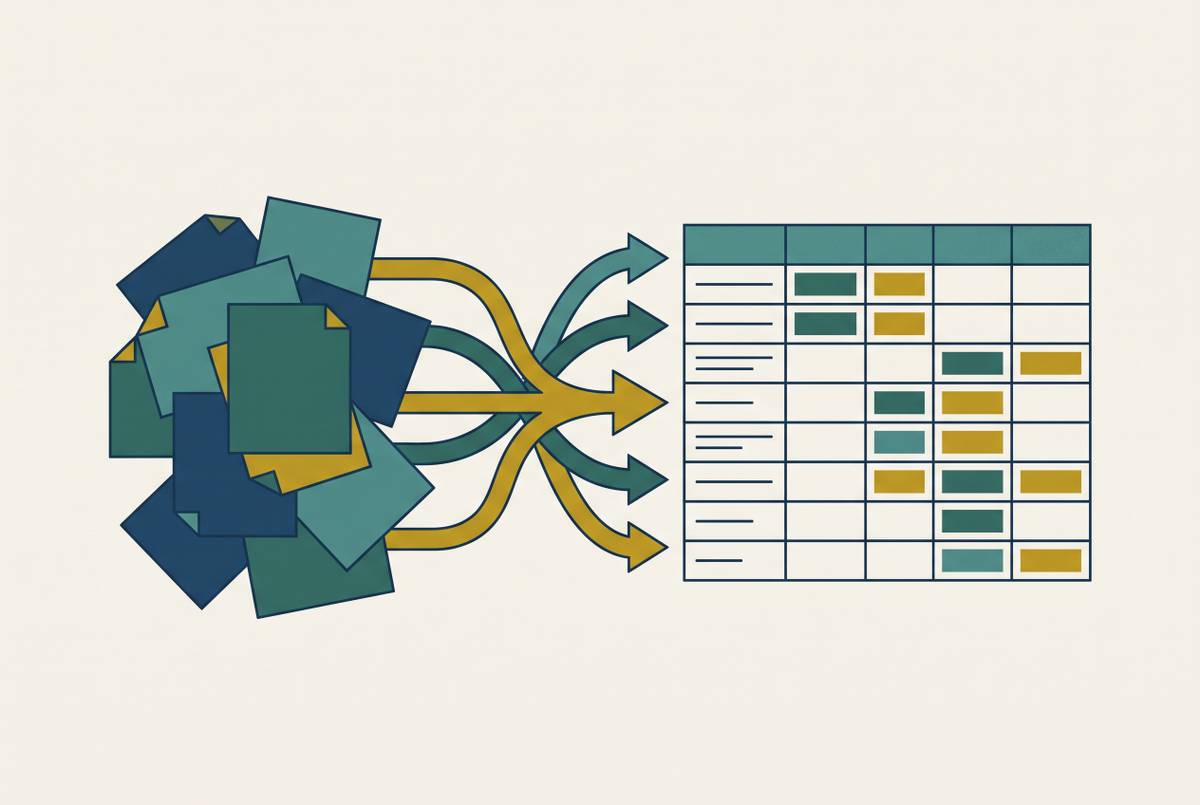
The real bottleneck in getting PCA and ESA data into a loan package is the manual work of pulling findings out of dense PDF documents and re-entering them into underwriting models, spreadsheets, and deal narratives by hand.
The scale of the problem is growing. Agentic workflows track which reports have been ordered, flag what's still outstanding, and check findings against a closing checklist. This removes the coordination overhead that causes so many deals to stall.
Lev's platform was built around this kind of integration. Lev Agent and Lev Memo are AI agents purpose-built for CRE deal workflows, built around real-time CRE data, and designed to automate the document-heavy steps where manual extraction of PCA and ESA findings currently slows deal teams down.
Environmental and condition reports are heavily fact-specific and site-dependent, which is precisely the kind of context where an AI error carries legal consequence, not just an inconvenience. Purpose-built, CRE-specific tools with clear data provenance reduce the legal and financial risk of errors in a way generic document AI adapted after the fact for real estate cannot. A tool that can show where a figure came from and how it was extracted is worth more to a deal team than one that simply returns an answer.
Building a loan package that moves through lender review without surprises
A loan package that integrates PCA and ESA findings directly, rather than attaching them as appendices for the lender to work through separately, gives underwriting what it needs to move with confidence, and that's the most reliable way to keep a deal timeline intact.
In practice, that means immediate repair costs from the PCA appear in the sources and uses table rather than waiting for the lender to calculate them independently. And it means confirming with vendors upfront that reports come with reliance letters, since a report without one may not satisfy a lender's closing checklist no matter how thorough the underlying work is.
Brokers and sponsors who can extract and structure ESA findings into a standard format understand how a lender will read those findings into underwriting. They can anticipate the closing conditions and pricing adjustments before the lender ever raises them. That's the advantage this entire process points toward: building the discipline of pre-screening early, ordering concurrently, and integrating findings directly into the package, which turns these reports into an asset. The deal teams that run this process well, with the right sequencing and the right tools behind them, are the ones lenders choose to work with again.