What Institutional Capital Markets Teams Lose Every Quarter to Manual Offering Memo Production
Document handling, not underwriting, drains analyst capacity and costs deals.

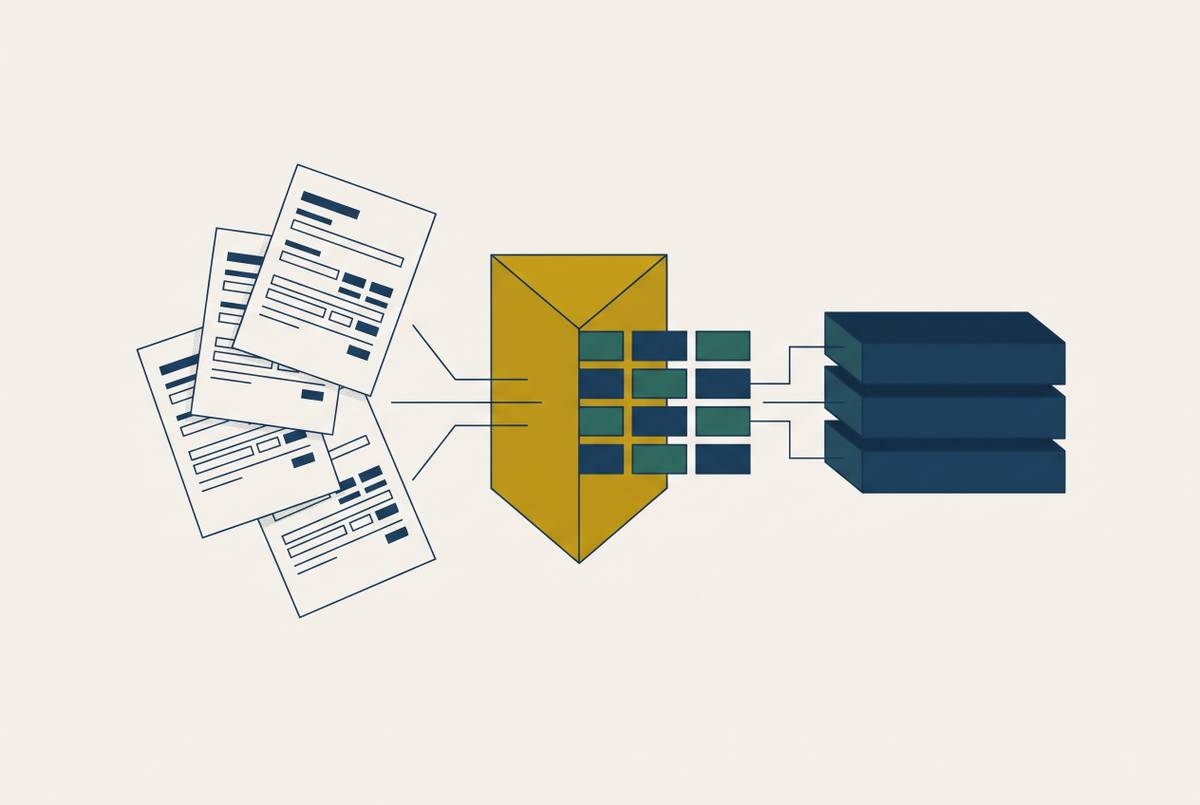
Automated CRE offering memorandum and loan memo generation turns raw property documents into structured data and first-draft financing packages, but analysts still make the underwriting judgments. Its value is not simply faster writing. Manual memo production consumes analyst capacity through extraction, formatting, and reconciliation, reducing the deals institutional capital markets teams can evaluate and execute each quarter.
Why analyst time is the hidden cost in every offering memo cycle
Institutional capital markets analysts are hired to screen, underwrite, structure, and argue for or against capital deployment. An offering memorandum production cycle asks them to perform a different kind of work. They pull figures from PDFs, reformat tables, reconcile sources, and assemble documents before they can exercise that judgment. Those tasks get the record ready but add no insight from analysis. The distinction is important because expensive analytical capacity is being used for document handling, even when the resulting memo looks like the product of analysis.
The cost rarely appears as a separate line item. Instead, it is distributed across individual deals, with each assignment absorbing another block of time that could have gone toward screening opportunities, working relationships, or modeling structures. A completed memo makes the production effort visible, but not the work displaced by it. That loss accumulates across the quarter. The relevant cost is therefore broader than the effort required to finish a document, because the same scarce resource also determines how much deal work the firm can undertake.
Where the hours actually go inside an OM production cycle
Rent rolls, operating statements, leases, entity documents, and third-party reports must be gathered before their contents can inform a model or memo. A CRE due diligence file often has dozens of items. In a manual workflow, each requires handling, and relevant figures must be extracted from documents that were not assembled as a single analytical record. Before the analyst can compare the information, it must be brought into a usable form.
Formatting then turns those extracted figures into tables and model inputs, while reconciliation establishes which figures the team will use when sources differ. Drafting comes after much of this preparation. The IC memo illustrates the burden at the investment decision stage, where a senior associate can spend a substantial block of time moving a mid-market deal from a blank page to a partner-ready draft. Data gathering and structuring account for most of that span. The document may present an investment argument, but much of its production time precedes the argument itself.
The screening queue exposes the same problem earlier in the funnel. An analyst reviewing incoming OMs must enter enough data to make a kill-or-advance decision, even when the eventual answer is to decline. That work repeats with every incoming opportunity. Unlike a full IC memo, screening is not intended to develop a complete investment case, yet it still incurs an extraction cost. As more deals come in, the team has to spend more of its time getting ready to decide, leaving less time to make decisions.
What manual extraction actually produces — errors, not just delay
Manual processing also introduces errors into the analytical record. This is not chiefly a question of diligence or individual care, because the workflow requires people to transfer information across documents and reconcile versions under time pressure. When OMs circulate by email and stakeholders modify local copies, the team can end up working from different versions of a deal structure. The figures are now based on different inputs. A discrepancy in LTV or DSCR can therefore reflect conflicting inputs rather than a genuine disagreement about the underwriting.
If committee review or lender diligence exposes a discrepancy, the team must return to source documents, establish the right inputs, and reconcile the affected calculations and memo. Extraction has effectively been paid for twice. The second pass also arrives under a different constraint, because a decision or lender response may now depend on its completion. What began as a document-handling problem becomes a schedule problem visible outside the team.
This rework compounds the original capacity loss. The analyst hours spent correcting an existing package are unavailable for the next opportunity, while the unresolved figure prevents the current deal from progressing cleanly. A memo that was apparently complete returns to the production queue. Consequently, counting only the time to the first draft understates the burden of manual production. The full cost includes the hours required to repair the record after others have begun relying on it.
How queue overload forces institutional teams into triage
When analyst capacity limits throughput, triage is a rational response. Teams cannot give every incoming opportunity the same attention while also completing active transactions, so they narrow the work they will accept. Smaller deals are harder to justify when their documents take as much work to handle as those for larger deals. Structurally complicated deals become less attractive when modeling their terms competes with an existing memo backlog. Deals that fit the team's existing templates get an edge because they are easier to process, regardless of what the analysis shows.
A higher effective minimum deal size excludes opportunities that might otherwise meet the firm's investment criteria. Declining complications reduces the room to pursue differentiated structures, while slow-walking unfamiliar packages favors a more standardized deal set. Capacity begins to shape the investment boundary. The resulting portfolio of pursued opportunities reflects not only the firm's appetite for risk and return, but also the amount of manual processing it can absorb.
Deals that the firm excludes or delays remain available to competitors with the capacity to process them. A team may therefore lose an opportunity before its analysts have formed a substantive view of its merits. That is both a deal-flow cost and a morale problem. It also explains why the burden of memo production cannot be assessed solely through the turnaround time of the deals that survive triage.
Why speed has become a structural competitive variable in deal execution
In competitive processes with compressed bid deadlines, a firm must underwrite and package deals quickly enough to participate. A strong investment view has limited use if the team cannot complete the work needed to put it before a committee or the right lenders in time. Manual extraction lengthens that preparation period. The faster firm gains earlier access to a decision based on a usable package.
Presentation quality also affects how capital responds. Lenders are more likely to show appetite for clean, complete financing requests whose underwriting takes current market conditions into account than for requests that are incomplete or poorly put together. Speed alone is not enough. A package that reaches a lender quickly but requires repeated clarification has not removed the underlying processing burden. The useful measure is the time required to produce a request that a lender can meaningfully assess, because packaging quality can influence both appetite and pricing.
Manual teams' document preparation process uses part of the time available for underwriting, lender engagement, and execution. When deadlines are tight, spending time this way makes it harder to compete as well as harder to get work done within the team. The gap is addressable at the workflow level. Extraction and formatting can be compressed without treating the investment decision itself as a task that software should make.
How can automated memo generation compress production without replacing judgment?
AI underwriting platforms can ingest raw deal documents, including OMs, financial statements, rent rolls, and appraisals, and use NLP and computer vision to extract and normalize their contents. They map that information into structured models, saving an analyst from re-keying each file. Document extraction, financial model population, and first-draft memo generation are the phases most directly affected, because they account for the dominant share of manual preparation work.
The IC memo makes the boundary particularly clear. Automation can organize the financial record and produce an initial draft, but the analyst must still identify risks that the CIM underweights and stress-test management projections against independent data. Structuring conditions and making the case to committee also remain human work. A faster draft is valuable because it leaves more time for those tasks.
Source attribution separates useful production support from untraceable output. A platform that cites each extracted figure to its originating document page provides an audit trail that lets the analyst inspect the evidence without repeating the entire extraction process. The analyst still has to judge whether the input is appropriate and whether the resulting interpretation is defensible. For automated CRE offering memorandum and loan memo generation, the meaningful capability comparison therefore includes document handling, model population, draft generation, and page-level source references.
How the full deal workflow changes when memo production is no longer the bottleneck
A financing package connects underwriting to lender outreach. When it is complete sooner, the team can direct more effort toward lenders active in the relevant asset class and market instead of spending that time assembling the request. Targeting remains essential to the outcome. A professionally packaged request sent to matched lenders moves differently from a manually assembled package distributed broadly, and the speed of those lenders' responses becomes part of the execution process.
The same shift leaves more time for diligence coordination. Analysts who are not repeatedly extracting and reconciling figures have more capacity to address the work needed for a deal to proceed. This removes a competing claim on the people responsible for interpreting the information and coordinating the next steps.
When records begin as structured data rather than being assembled after the fact, information about which lenders responded, on what terms, and to which deal profiles can accumulate within the workflow. That context informs the next outreach cycle. Teams no longer have to reconstruct the full relationship history from memory and email, allowing relationship development to draw on the record of prior activity. Over the quarters that follow, this helps teams cover more deals and use what they know to make better lender matches.
What institutional teams should audit in their current OM production process
To quantify the cost in their own operation, teams should audit the actual time distribution across extraction, formatting, reconciliation, and drafting in a recent deal cycle. How much analyst time in the last quarter went toward pulling figures from PDFs or reconciling document versions, and what deal work went undone? The distinction prevents a finished memo from being treated as the only relevant output. It places production effort against the screening, structuring, and relationship work that competes for the same capacity.
The audit should then examine the queue and rework. How many OMs or IC memos were left incomplete because of capacity constraints? How many errors surfaced during committee review or lender diligence that originated in manual data entry, and how many days did remediation add? Those questions connect hours to execution consequences. The effective minimum deal size also deserves scrutiny, because a threshold set by analyst bandwidth has a different meaning from one set by deal economics.
A team that cannot answer these questions confidently is likely undercounting the cost, because the hours are scattered across deals and quarters. The next step is to evaluate a connected workflow that handles extraction, memo generation, diligence coordination, and lender outreach in one place, while preserving analyst responsibility for judgment. The audit gives the team a way to assess whether that change returns capacity to worthwhile deals. In the quarters that follow, that evidence can help the team cover and compete for a wider range of deals, without assuming that making documents faster will by itself lead to better investments.