Structured Data Extraction From Borrower Financials Without Rebuilding Your Underwriting Stack
AI extraction turns messy borrower files into cited model inputs.
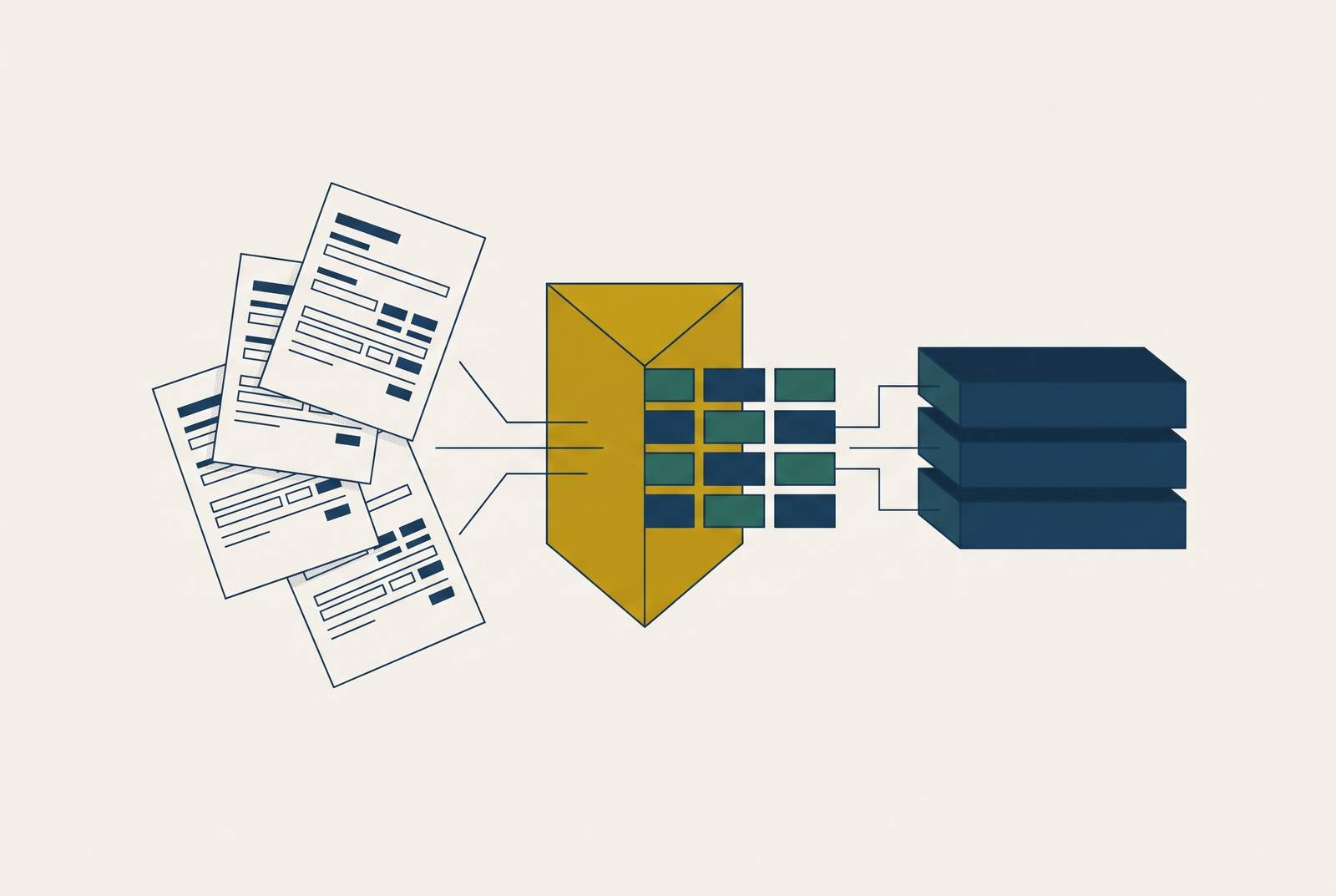
AI financial spreading automation for CRE underwriting teams works as an upstream document intelligence layer alongside the existing underwriting stack. It converts borrower financials into structured, source-cited inputs for existing Excel models, loan origination systems, and credit workflows. Its value depends on separating extraction, normalization, and reconciliation from the credit judgments that remain with a qualified analyst.
Why unstructured borrower financials are the actual bottleneck in CRE underwriting
A CRE loan file arrives as PDFs, scanned rent rolls, T-12 operating statements, tax returns, partnership K-1s, appraisals, and environmental reports. Each document has its own format. Before analysis can begin, an analyst must find the figures, work out what the line items mean, and rekey the values into a spreadsheet. Rent roll abstraction alone can consume a substantial share of the many analyst hours required for a multifamily acquisition analysis. That work takes time the lender needs to test assumptions and assess credit.
The difficulty grows when the documents disagree. In-place rent on the rent roll may not match effective gross income on the T-12, while the appraisal assumes a different stabilized occupancy. Those differences must be explained before DSCR, LTV, and risk grades can draw on inputs that fit together. The bottleneck is therefore both accuracy and throughput, because rising loan volume cannot be met simply by hiring proportionally, and changing credit standards does not resolve document handling.
What the extraction layer actually is — and what it is not
CRE underwriting software serves three distinct functions. Document intelligence tools read source documents and convert them into structured data that a model can consume. DCF modeling platforms run discounted cash flow projections, NOI analysis, cap rate sensitivity, and return scenarios. Deal management platforms handle pipeline tracking, document storage, approvals, and investor reporting. These categories address different parts of the process, even when their descriptions use similar language about underwriting automation.
A deal management platform does not remove the need for manual data entry just because it stores the documents, and a DCF tool may not parse the files its inputs come from. Nor does a platform claiming all three functions establish that it performs each well. Extraction sits before modeling and supplies the data on which the model operates.
That division of labor leaves the existing analytical tools in place. The extraction layer reads the documents, produces structured outputs, and hands them to the lender’s model or credit system. The model then produces projections and return profiles rather than taking responsibility for document interpretation. Clean handoffs make the architecture additive, so adopting extraction need not displace established models, templates, or credit systems.
What an extraction layer ingests and why CRE documents require purpose-built handling
Rent rolls contain unit-level in-place rents, lease terms, escalations, options, and vacancy, often arranged differently for each property. T-12s and operating statements group income and expenses under labels that each borrower uses. When tax returns and partnership K-1s are spread into global cash flow across guarantors, pass-through income and entity-level obligations must be treated the same way. The document type determines the review logic. Appraisals introduce stabilized occupancy and cap rate assumptions, while agency workbooks have completion requirements specific to Fannie Mae, Freddie Mac, and similar programs.
Format variation is only part of the difficulty. ExtractBench identifies challenges including scans, handwritten annotations, tables continuing across pages, hierarchical headers, and long schedules that can truncate during extraction. A tool may capture legible figures yet lose the relationships that explain them. Generic OCR therefore does not, by itself, provide a usable CRE spread. The analyst may still have to verify and correct field mappings line by line.
Purpose-built handling checks captured values against what the lender needs to review. It can flag an expense category missing from a T-12 when credit policy requires it, or identify an appraisal occupancy assumption that differs from the borrower’s figure. These checks require recognition of the document’s text and financial structure.
How normalization and reconciliation work inside the extraction step
Normalization maps borrower terminology to the lender’s categories. The same expense may appear as “management fees,” “property management,” or “admin” across different T-12s, yet need to enter one lender-defined line item. A schema specifies the expected fields for a document type and deal structure. Extracting against that schema produces consistent outputs despite differences in borrower formatting, without requiring a new extraction template for each file.
When rent roll in-place rent, T-12 effective gross income, and appraisal stabilized income differ, the tool must expose the discrepancy and make any choice of figure explicit. The difference may come from timing, concessions, vacancy treatment, or extraction error. Datagrid’s credit stage workflow describes surfacing those likely sources of conflict. A difference can be legitimate, but it still needs to be visible before the analyst accepts it.
Source traceability makes both operations reviewable in practice. Every extracted figure must lead back to the specific page or cell in its originating document. The extraction step can also apply lender-defined policy logic, computing DSCR and debt yield against citable assumptions and flagging threshold crossings with the input that drove them. These calculations help with exception review, while modeling is still needed. They do not set an exit cap rate, defend rent growth, or identify a wrong strategy underlying a technically correct model.
Where the extraction layer hands off to human judgment — and why that boundary is load-bearing
The handoff must be part of the workflow. Datagrid’s agent workflow documentation describes a structured record with values flagged by confidence, exceptions prioritized by policy impact, and source citations attached. That record gives the analyst a basis for confirming the extraction while retaining responsibility for judgment. Without such a boundary, automation delivers an opaque answer that the reviewer must reconstruct. The boundary is what makes the extraction layer usable without delegating the credit decision.
There is a serious objection to removing manual preparation. Preparing a file helped bankers develop a working understanding of the borrower, a baseline for comparison, and confidence about where figures came from. Offloading that work can remove part of their analytical development. Analysts still examine exceptions, question accounting choices, and build the credit narrative, but do so from structured inputs with unresolved issues exposed.
Poor documents make this boundary especially important in practice. Poor scans, handwritten annotations, and unusual statement formats make extraction less accurate, so fields whose values are uncertain should go to a qualified reviewer and any estimates should be disclosed. AI-derived spreads and ratio calculations must be reviewed and approved by a qualified analyst before supporting a credit decision. As contracts start to address who is responsible for AI-generated workpaper errors, procurement teams should plan for that responsibility when they assess tools.
How can extraction feed existing models and workflows without replacing the underwriting system?
Direct model population writes structured data, cell by cell, into the Excel model the team already uses. This preserves established treatment of expenses, concessions, and below-market lease roll rather than substituting a vendor’s model for accumulated institutional judgment. A second route exports structured records through an API or standardized format to the existing credit or loan origination system. Extraction supplies the inputs while the system that receives them still handles analysis and approvals.
For community and regional banks, the best fit covers more than rent rolls and operating statements. It also includes sponsor and guarantor tax returns spread into global cash flow, DSCR and debt yield calculated against citable assumptions, and appraisal and environmental details surfaced for review. Deployment scope then determines the implementation burden. Standalone extraction using an API or web workflow can often reach production within weeks, while broader platform implementations take longer because they involve configuration, integration, migration, workflow design, and training. The iPaaS model follows the same approach by using open APIs to connect core banking systems, fintech applications, and third-party services while keeping the infrastructure in place.
Adoption should start narrowly. Rent rolls, T-12s, and operating statements provide document-heavy, repeatable workflows in which extraction value is immediate and measurable. Portfolio analytics comes later because it depends on data consistency that many lenders have not yet achieved.
What determines whether an extraction tool actually reduces analyst work rather than adding a new review burden
A lender’s due diligence should test automatic field population and whether review becomes easier. Does every extracted value cite the page and field it came from so it can be checked without rereading the document? Does the tool flag rent roll and T-12 conflicts, or borrower statement and appraisal differences, and make any resolution explicit? Uncertainty needs an explicit route to review. Missing or uncertain values should remain unknown and go to a named reviewer, and any filled values should be disclosed.
Does the output populate the team’s existing workbook, or require an export followed by manual transfer from a proprietary format? Can the analyst inspect exported formulas and verify that scenario changes trace back to extracted inputs? A practical pilot should use three anonymized deal files, including a clean package, a scanned rent roll, and a package with conflicting dates or missing expenses.
Production economics should be assessed against completeness as well as accuracy. ExtractBench evaluates value accuracy, record completeness at scale, word- and page-level grounding, and measured cost. Those dimensions reflect the reviewer’s need to validate both the figures and the records that should have been captured. Long schedules deserve particular attention because truncation creates hidden rework that headline accuracy claims may not reveal. Small differences in cost per page also add up at production volume, while a vendor that knows the edge cases for each document type can spare a team some of the work of finding those failures during an internal build.
What the extraction layer makes possible that manual spreading does not
Consistent, source-cited extraction enables exception-based review at scale. Exception-based review frees analysts from checking every figure for completeness so they can concentrate on conflicts, threshold crossings, and missing items. That changes the use of analytical capacity from reconstructing the file to investigating its credit implications. Borrowers submitting AI-structured packages in the lender’s expected format can also move through review faster because the inputs are cleaner and more consistent.
Refreshed borrower statements, updated appraisals, and covenant calculations can be compared with prior periods and peer credits without manually rebuilding each record. Annual reviews and early-warning workflows can then depend less on an analyst’s memory of the original file. Portfolio analytics, automated covenant monitoring, and risk-grade consistency need this shared data that can be traced to its source.