How CRE Debt Teams Are Using Automation to Compress Deal Timelines
Automation lets deal stages run in parallel instead of waiting sequentially.
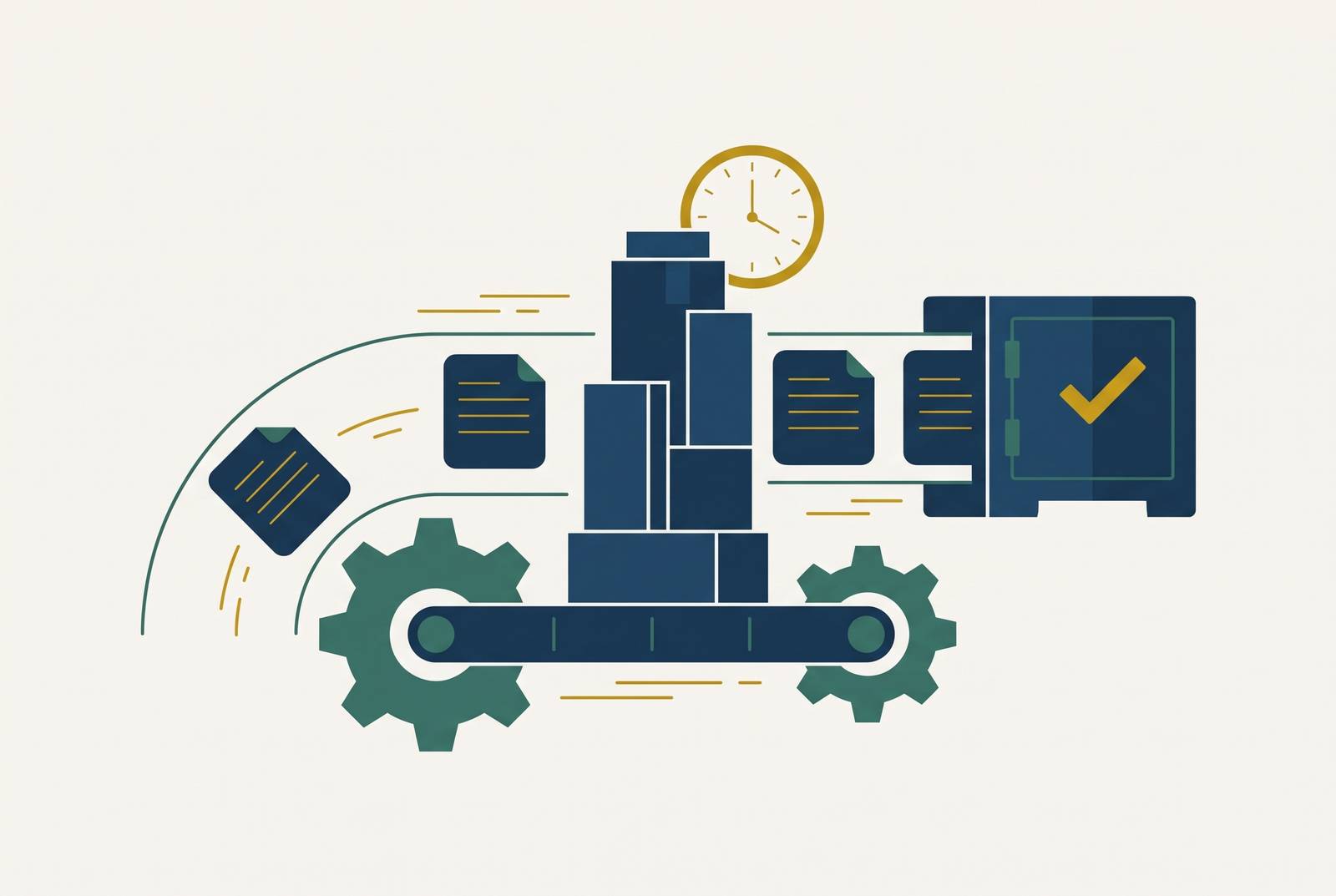
CRE debt teams compress deal timelines by using automation to replace sequential handoffs with parallel work streams across document intake, underwriting, and execution. An AI platform built for commercial real estate deal workflows links source documents, analysis, and human review so its answers are part of the deal process. The decisive distinction is not how quickly it generates an output, but whether that output lets the next stage begin earlier without weakening credit controls.
Why CRE debt timelines are lengthening even as origination volume climbs
The Mortgage Bankers Association's 2026 CREF Forecast projects commercial mortgage originations will reach their highest level since 2022, with substantial growth over the prior year. That volume arrives as $1 trillion in existing loans comes due over the next two years, forcing lenders to run origination and refinancing pipelines simultaneously. The calendar is tightening from both directions. Institutions must process more transactions through operational infrastructure built for a different pace, while maturity deadlines limit how long refinancing work can wait.
The resulting pressure falls on document handling, review cycles, and fragmented data. Capital availability and deal flow do not resolve those constraints because neither changes how information passes through a lending organization. Automation becomes an operational necessity rather than a convenience when these processes cannot absorb the workload. The central constraint is the process itself.
How sequential handoffs, not slow workers, create most of the delay
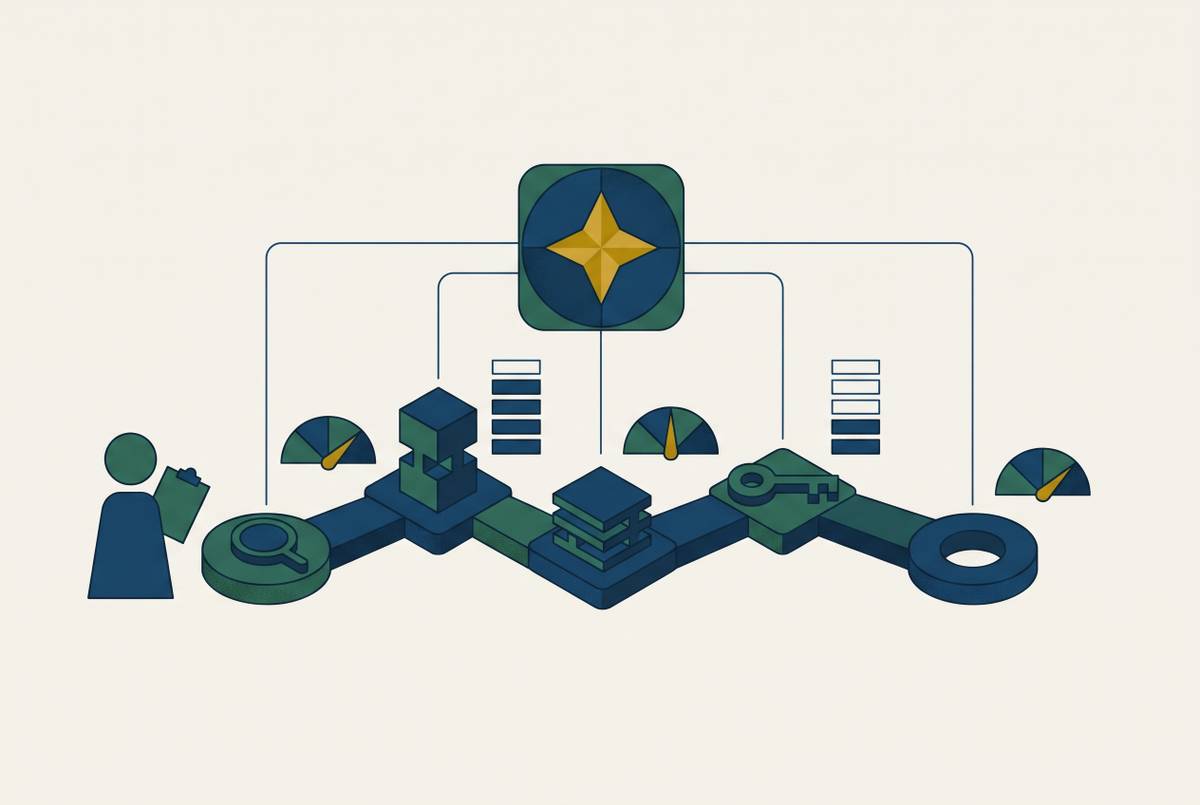
The standard lending sequence moves from document receipt through underwriting, credit memo, credit committee, and term sheet. Each stage waits for the one before it, so a delay near the beginning cascades through the transaction. Every handoff also requires the next reviewer to become familiar with the deal before substantive work begins. The queue adds time without adding analysis.
Document intake concentrates the first and largest block of drag. Offering memorandums, rent rolls, T-12s, and appraisals arrive in different formats from each sponsor or broker, requiring an analyst to read, interpret, and manually re-enter the data. Traditional workflows spend 2–4 hours per deal on this work before underwriting can begin. That manual translation also invites inconsistency and error across analysts. Once underwriting starts, a second set of dependencies holds back the credit memo and then the investment committee package.
The same architecture persists after closing, when covenant checks follow a quarterly schedule and DSCR updates depend on the next financial statements. Tenant stress may stay hidden until a problem comes to light. Additional analysts can speed individual tasks, but they do not change which tasks must wait for others to finish.
What parallelizing workflows actually means in practice
Before automation, an analyst extracts the documents, an underwriter completes the model, and a credit analyst begins the memo. In a parallel workflow, document extraction feeds a live underwriting model and gives the credit analyst information to begin work before underwriting is complete. Access to usable information becomes the starting condition for downstream work.
The same document-processing event can generate a property overview, tenant summary, and market comp set. With those outputs, work on the investment committee package can start without a separate round of research after underwriting. Total work need not fall by the same amount as elapsed calendar time.
Final underwriting review and approval still have jobs to do that document extraction cannot take over. The distinction is between work that requires a completed decision and work that merely requires the underlying data. Automation lets work that needs only the data move ahead while professionals keep control of decisions.
Where the compression is measurable: document intake to underwriting model
Manual document-to-model ingestion can consume most of a working day per deal. That broader task includes turning an offering memorandum, rent roll, or T-12 into a populated underwriting model. It is the first measurable target for compression. AI-powered platforms parse those documents, along with appraisals and leases, pull out the fields they need, and map them to standardized model inputs so no one has to re-enter the data by hand.
Underwriting occurs at origination, every quarter, at extension, and at refinancing, with each pass returning to source documents that do not share a format. A document-handling bottleneck therefore compounds across a portfolio. Automating ingestion removes a recurring preparation task. More importantly for timelines, it makes the resulting information available to downstream work without another manual transfer.
Built Technologies' AI Draw Agent is another example of how automation can help with lending work that draws on many documents. It has automated hundreds of thousands of tasks in pilot at high accuracy while enforcing each lender's own standard operating procedures on every draw. Draw processing provides a procedural example for document-to-underwriting-model ingestion rather than a direct benchmark for underwriting time savings.
How automation reaches the credit memo and capital sourcing stages
Once extracted data reaches the model, memo production no longer needs to wait for every part of underwriting to finish. Writing the property narrative, market overview, tenant summary, and financial summary by hand has usually taken hours. Automation allows that preparation to run in parallel with final underwriting review. Analysts retain the judgment-dependent portions of the memo.
Capital sourcing can also start earlier and run while the memo is being prepared. Earlier access to deal information changes when sourcing work can start. The case for compression remains separate from claims about lender fit, terms, and the quality of the eventual transaction.
C2 Systems and Uptiq announced on October 22, 2026, that Uptiq's AI agents would be embedded directly into the Covalent Loan Origination System. Under that design, Covalent calls the appropriate agent at the relevant step, bankers remain in the system, and every output returns to a banker or underwriter for review before the loan advances. Integration removes re-entry and re-familiarization overhead between steps. The announcement describes a workflow design rather than a measured closing-time result, but it establishes a concrete criterion for purpose-built software. The agent operates within the loan process instead of adding another disconnected destination for the team.
Why post-close monitoring is the next stage where sequential workflows break
The same dependency that delays underwriting becomes more consequential in portfolio surveillance. Traditional monitoring waits for monthly or quarterly financials before calculating DSCR, by which time a covenant breach may already have occurred or become unavoidable. Closing changes the cost of waiting from a longer transaction schedule to less time available for a risk response.
The U.S. commercial real estate market has trillions in outstanding debt tied to income-producing assets with DSCR covenants that assume stable or growing NOI. Floating-rate debt and lease rollover put that assumption to the test. When reports wait for accounting periods to end, they can fall behind changes in the property's cash flow. Faster calculation alone cannot remove that lag. The workflow must use information that changes before the next financial statements arrive.
AI monitoring systems use lease-level revenue projections, tenant payment behavior signals, expense trend modeling, and market rent reversion assumptions to work out what cash flow will look like. With these inputs, teams can check for covenant stress as it builds, before reported NOI arrives. The connection to intake automation is direct. In both cases, work starts when relevant information becomes available rather than when a preceding reporting package is complete. Forward projections still require scrutiny, but they change when risk can enter the review process.
The trust gap that slows adoption even when the tools are ready
Speed is not necessarily the binding constraint on adoption. An AI system can underwrite a mixed-use deal in a fraction of the time required by a traditional process, yet the output still has to survive an investment committee committing real capital. Committees need numbers they can take apart. If they cannot examine how a result was produced, a shorter production time does not make the result usable.
For AI outputs to enter valuation, credit decisions, and term sheets, every number must be explainable, auditable, and traceable to a source a human can check. This requirement is stronger than a general assurance of accuracy. A professional must be able to defend the specific result to the people making the decision. Without that foundation, faster generation leaves the approval bottleneck intact. It may produce a finished-looking package without producing a package the institution is prepared to act on.
WalkMe's 2026 State of Digital Adoption report found that the majority of enterprise workers either bypass AI tools and complete tasks manually or do not use AI at all. That finding concerns enterprise adoption and identifies a constraint relevant to CRE technology investment. Tools that workers bypass cannot compress their workflows. The wider gap between starting pilots and meeting AI objectives similarly points to foundational readiness.
The C2/Uptiq design addresses this objection by routing every output back to a banker or underwriter before the loan advances. Automation does the prep work and handles the volume while humans make the decision. This preserves a defined review gate without forcing all preparatory work back into sequence. Human review does not by itself establish that every output is auditable. The structural answer combines that review with source traceability, so speed and defensibility become requirements of the same workflow.
What firms that are capturing real compression are doing differently
Firms capturing measurable compression distinguish between dependencies created by data handling and dependencies required by judgment. They automate the former so downstream work can begin earlier, while preserving the latter at decision-final and relationship-dependent points. That distinction governs where automation belongs. A point solution that accelerates one task but leaves its surrounding handoffs unchanged can deliver a local gain without shortening the overall transaction.
Firms need to identify stages that wait for information, automate their preparation, and connect their outputs to the work that follows. To do this, firms need to get their data in order before they add more tools. JLL's framing makes the prerequisite explicit by treating an AI strategy without a data strategy as a route to faster answers to the wrong questions. Linked workflows need steady feeds of data they can trust. Without them, work that runs in parallel can spread bad inputs across several tasks at once.
Platform fit therefore depends on the connections between tasks. The C2/Uptiq model embeds agents within the LOS and returns outputs for review before advancement. CarbonAI's model uses agents to carry out linked analytical tasks and bring the answers together in one package. These models illustrate different forms of integration. They give buyers concrete criteria for distinguishing workflow software from stand-alone AI output.
Human judgment still comes first in term sheet negotiation, deal structuring, investment committee presentation, and borrower relationship management. Those roles depend on context, creativity, and leverage that workflow tools do not replicate. Firms expecting automation to remove the need for experienced professionals at these points will be disappointed. Early movers instead build institutional knowledge about what agents surface and train their systems on proprietary deal data. Their lead grows as they learn how to link automated prep work to decisions that humans can defend.